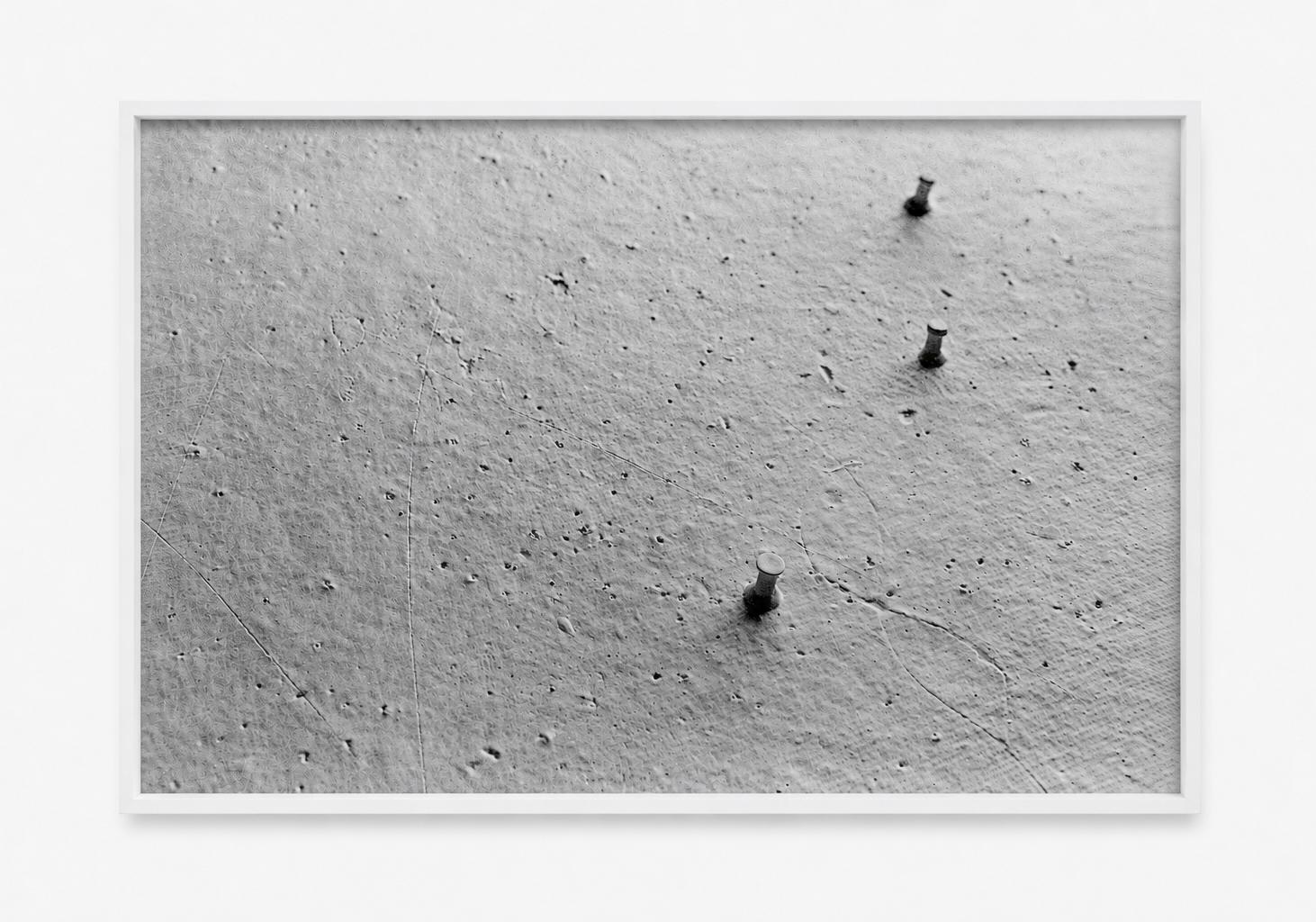

Study for "Untitled #51, (24700 McBean Pkwy, Valencia, CA 91355)"
Fiona Connor
2026
Gelatin silver print on baryta paper
24.2 x 16.6 cm
Unframed
Edition of 25 copies signed and numbered by the artist on a certificate, plus 2 artist’s proof and 2 publisher’s proof
This edition by Fiona Connor extends her sustained investigation into the community bulletin boards that punctuate public space. Initiated through exacting replicas of boards encountered on the streets of Los Angeles, this body of work foregrounds the social and material charge of these anonymous surfaces, conceived as sites for the exchange and circulation of information.
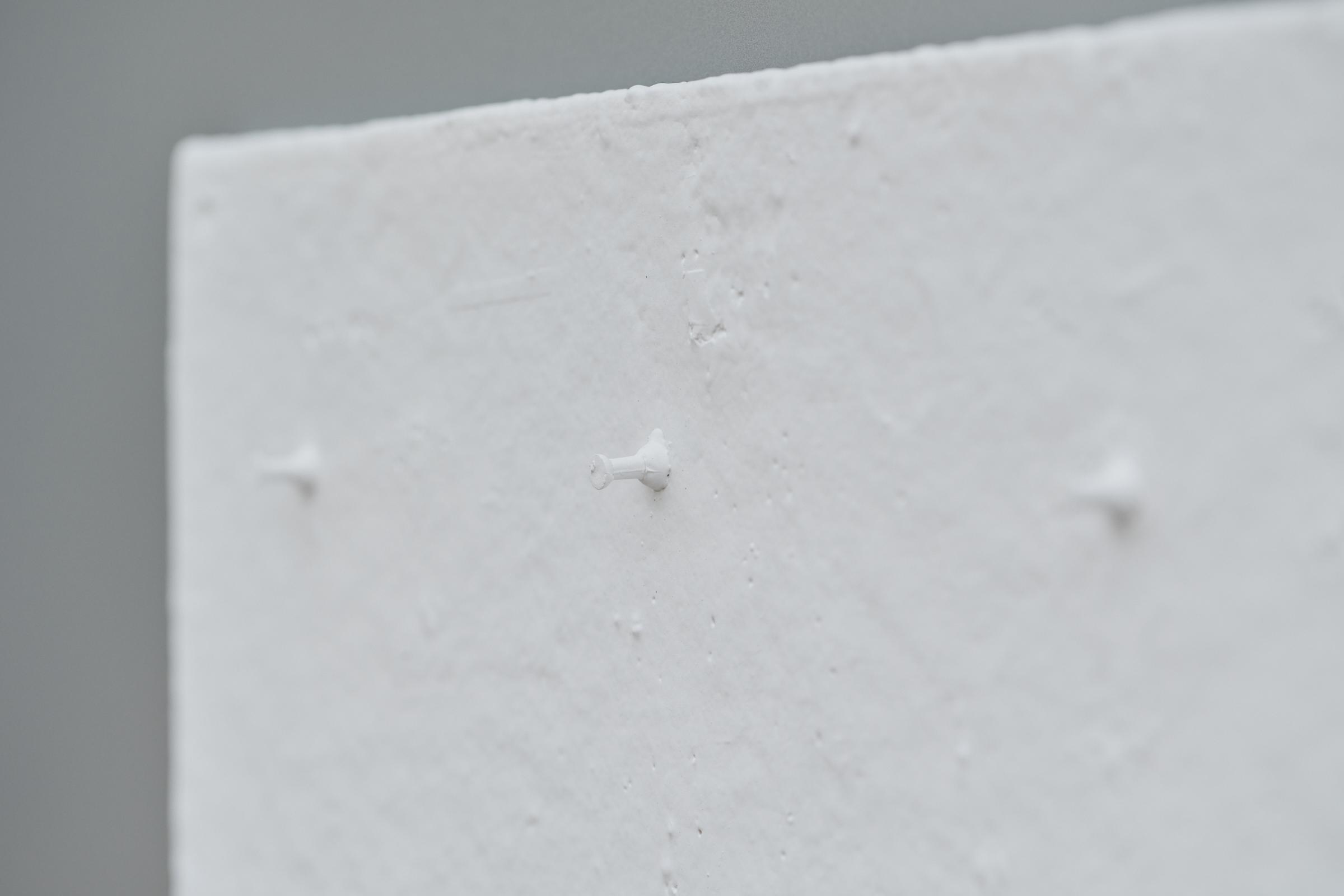
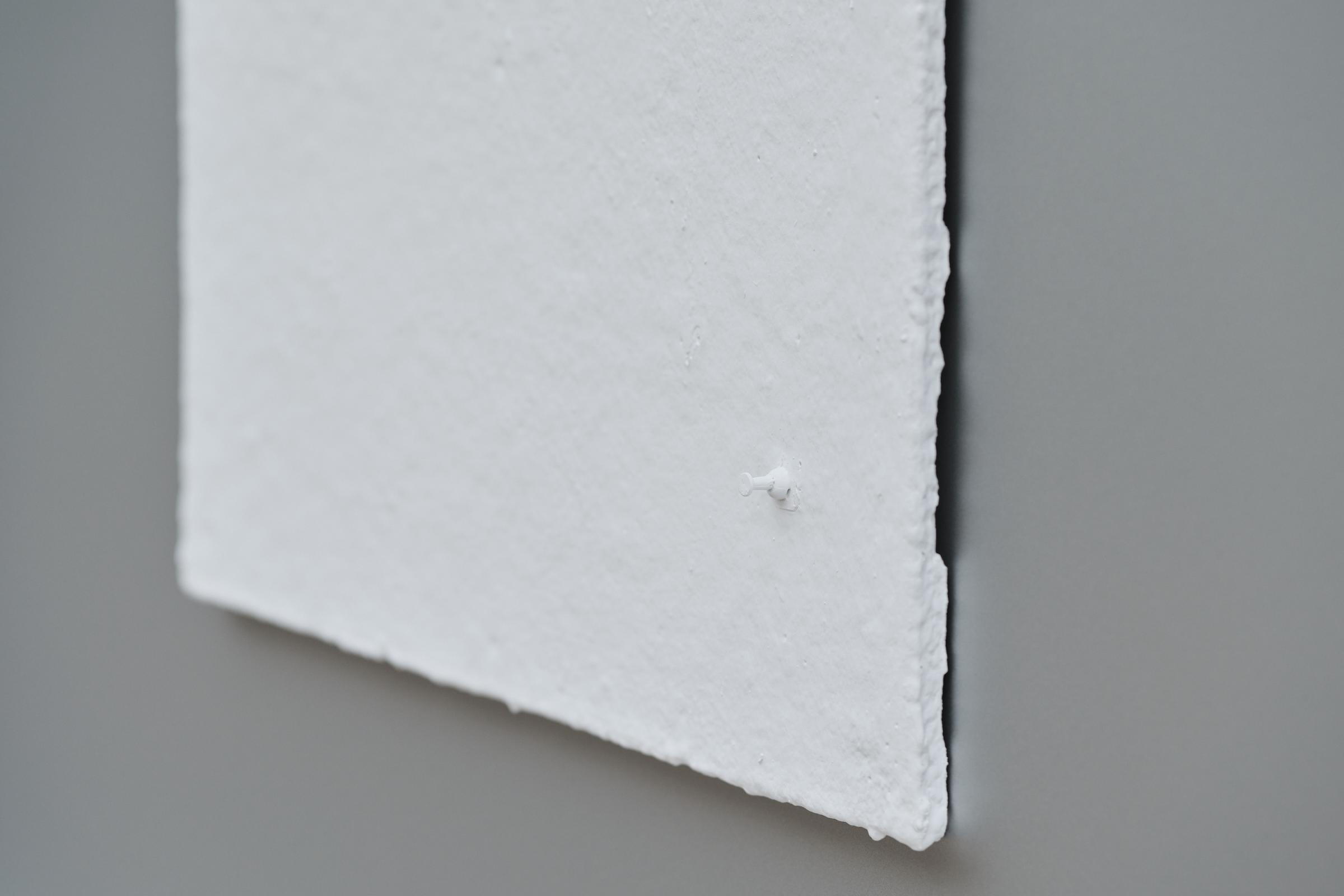
In a second phase, the artist produced a series of casts of empty bulletin boards, painted white. Made from impressions taken in situ from boards mounted on the walls of the California Institute of the Arts, these casts meticulously register surface irregularities and traces of wear. Though devoid of visible content, they retain the latent memory of past postings, functioning as a kind of collective palimpsest suspended in time. Their location within an art school introduces a subtle irony to these variations on the blank canvas and the monochrome, reactivating the premises of modernist painting through the lens of utilitarian objects.
The work Study for “Untitled #51, (24700 McBean Pkwy, Valencia, CA 91355)” extends this investigation through a photographic approach that mirrors the logic of casting. After these surfaces are translated into a single material—resin—photography fixes them anew as a unified visual entity. Captured in extreme proximity to the material, almost at ground level, the image adopts a near-aerial viewpoint. Its ridges, hollows, and irregularities evoke a lunar topography of craters and ravines, while the absence of a horizon or stable scale produces a sense of spatial indeterminacy. As a photographic exploration of a sculptural work that itself questions the codes of painting, this approach echoes Élevage de poussière, in which Man Ray and Marcel Duchamp made visible the accumulation of time on The Large Glass. In both cases, the image does not merely document the object; it opens onto an experience of space that is at once visual, tactile, and speculative.


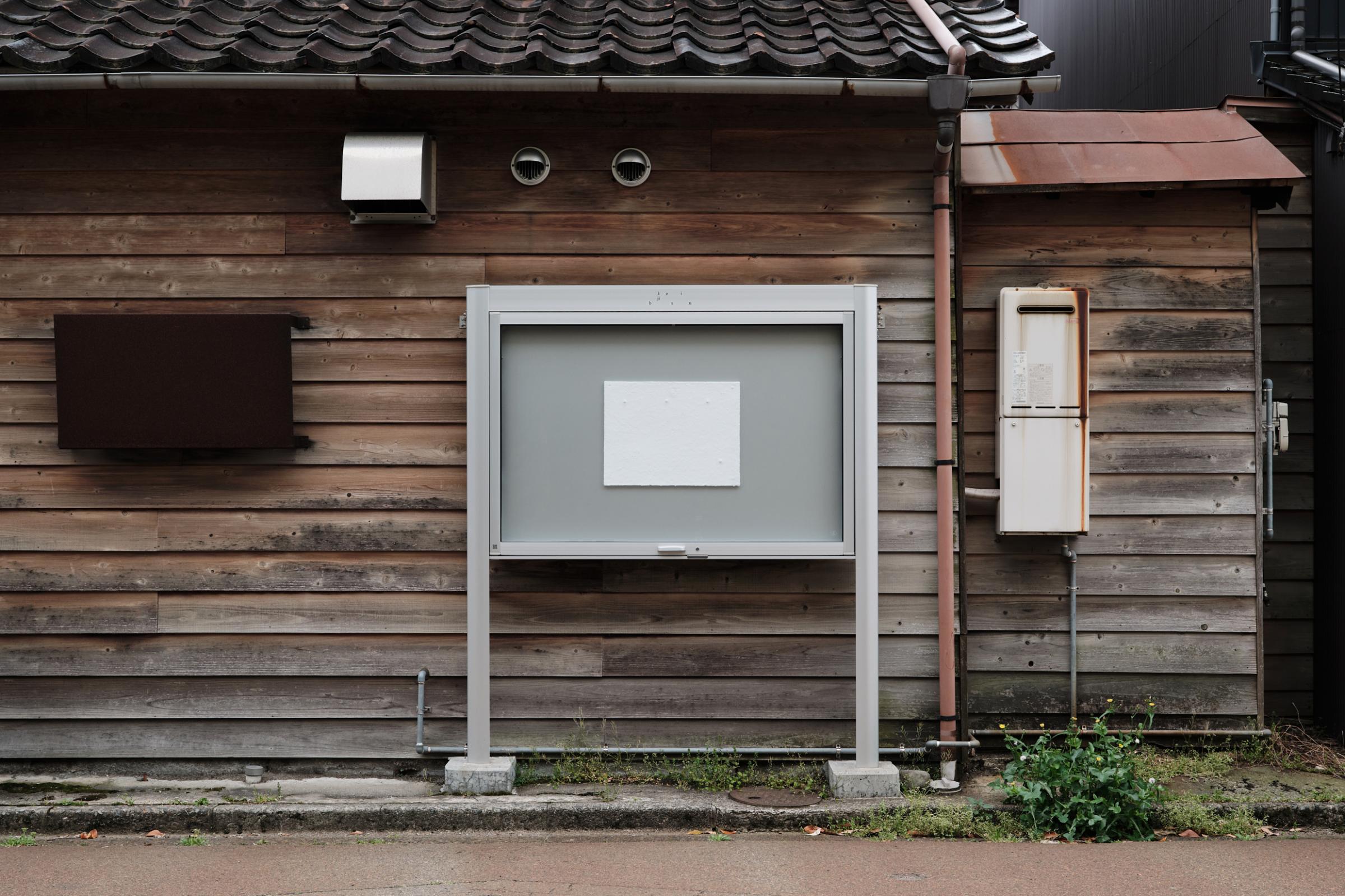





Fiona Connor's exhibition took place at Keijiban from April 15 to May 14, 2026.