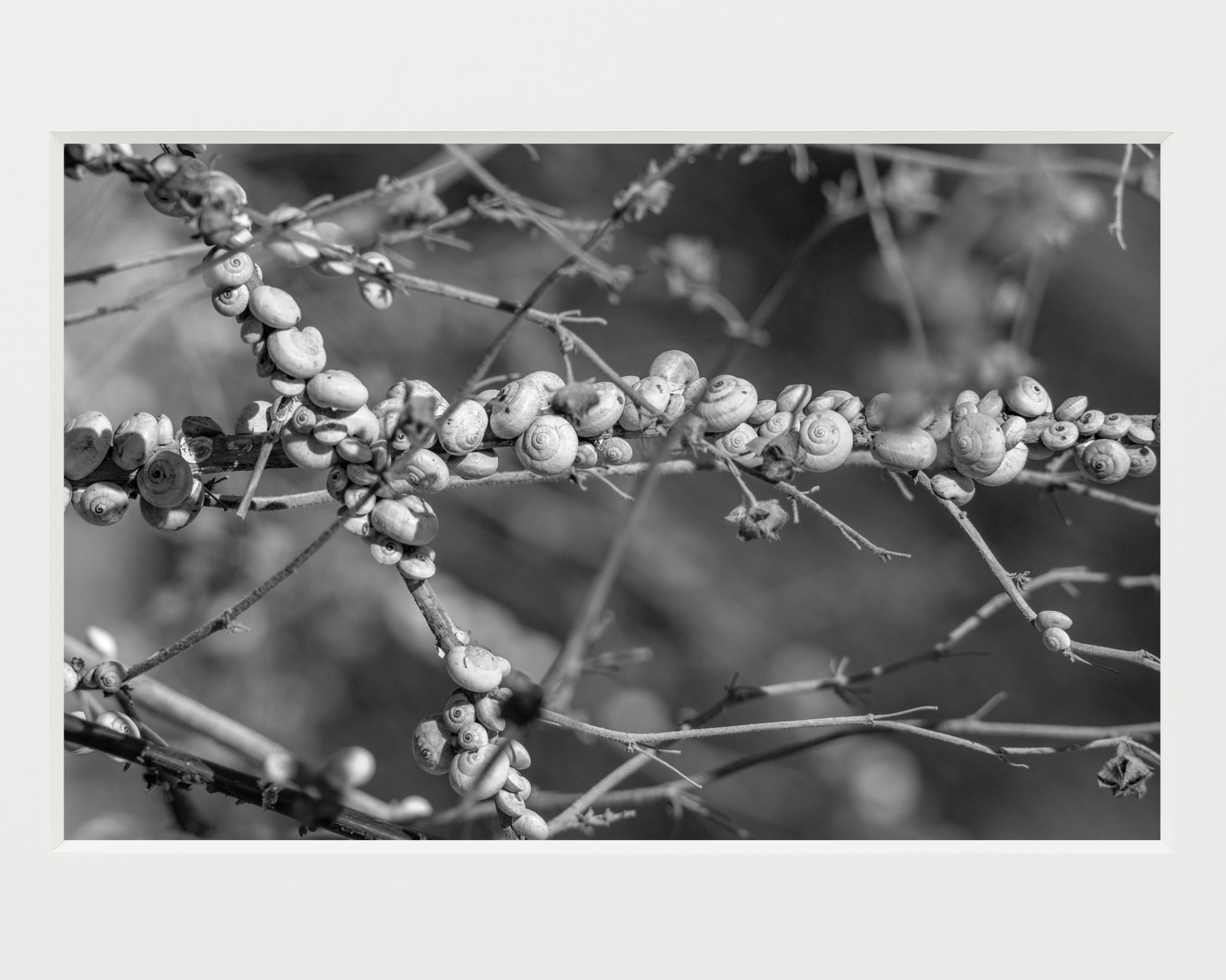

35.84707° N, 14.48520° E (Theba pisana)
Jeffrey Stuker
2026
Lambda print on Ilford RC paper
19.5 x 30.4 cm
Unframed
Edition of 25 copies, numbered and signed by the artist, plus 1 artist’s proof and 1 publisher’s proof
35.84707° N, 14.48520° E (Theba pisana) emerges in the wake of L-għajn, a new film by Jeffrey Stuker. Developed over an extended period of living and working in Malta, the film brings together several strands of historical, scientific, technological, and autobiographical research that have informed the artist’s practice for more than a decade. Among other subjects, Stuker has investigated a semiconductor factory that has taken root in the ancient village of Kirkop. This factory is the site where Nvidia’s first microprocessor was manufactured, a foundational technology without which today’s computing devices — the infrastructure underpinning the large language models and other forms of artificial intelligence now so widely celebrated — would not have come into being.
It was in the field facing this factory that Stuker discovered this cluster of gastropods belonging to the species Theba pisana. By climbing onto vegetation and gathering in clusters, these snails partly escape the harsh conditions of the ground. During periods of intense heat, they can enter a state of aestivation, a form of dormancy that allows them to slow their metabolism. They then seal the opening of their shells with a membrane of dried mucus, limiting water loss.
These clusters, at once organic and petrified, evoke forms of coordination and collective intelligence. Through their survival strategy in conditions of drought, they offer, on a tiny scale, an example of adaptation to global warming — a process to which the unchecked expansion of AI itself contributes. This living, sculptural constellation thus stands as a modest presence in the face of technological excess, a quiet protest against the grandiose claims made on behalf of artificial intelligence.