

Wading in a canal at night...
B. Ingrid Olson
2025-2026
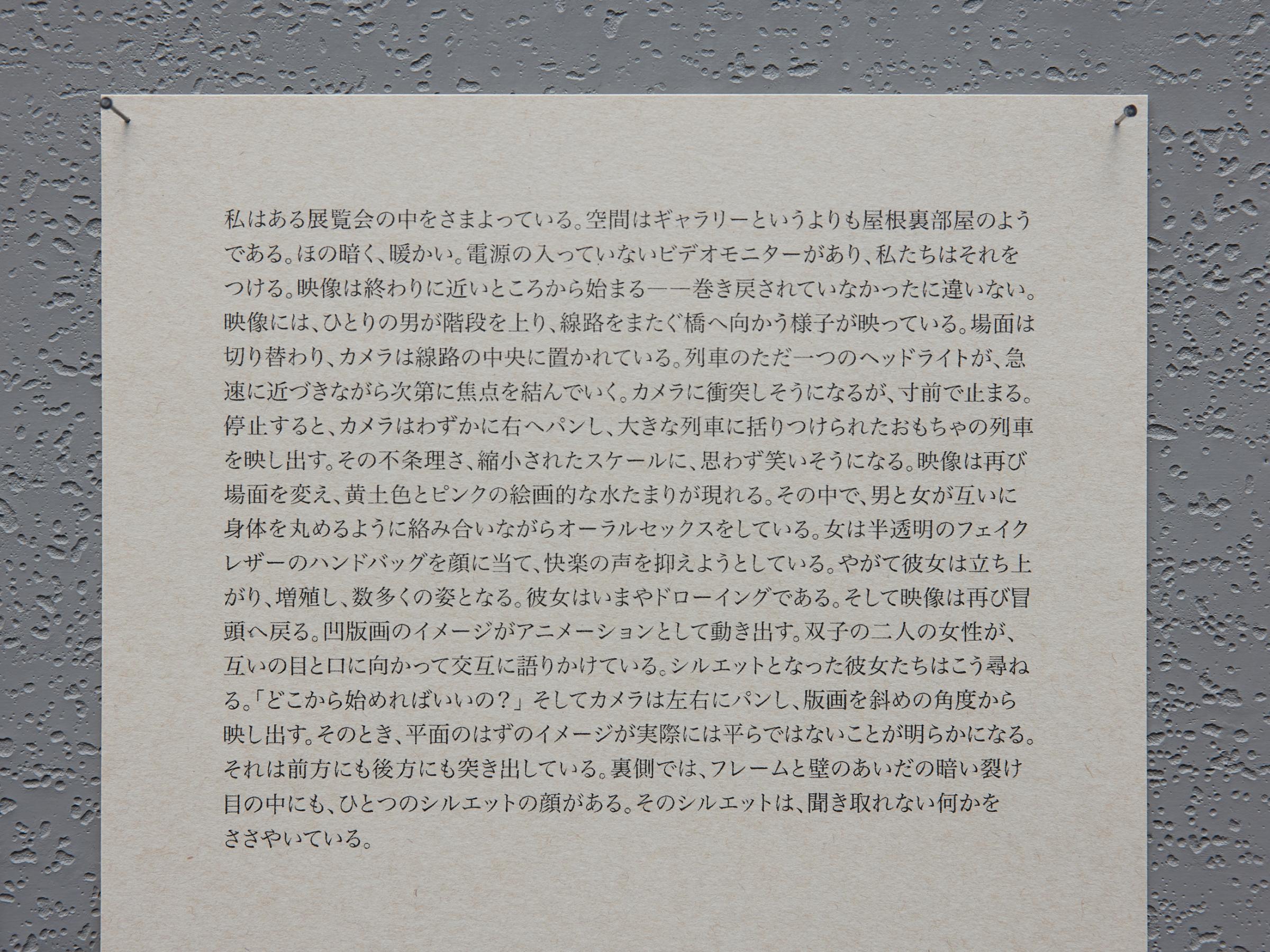
Full title: Wading in a canal at night. Bodies in the water. One hiding, and busted. Others bloated, dead. I talk to the injured one. We swim up to a large Victorian house. I have to pee, so I go inside. My friend tells me she pees standing up using a soft funnel. She hands it to me to let me borrow it. I see there’s lipstick on the tip, which I ask her about. She smiles but doesn’t say anything. In the bathroom, the stall is old and worn. The lock on the door won’t close. The lock has a beautiful metal clasp, but a screw seems loose. I try to tighten the screw with my finger. Then someone’s daughter comes in like an animal on all fours, and she climbs up the stall walls. She’s perched on top, halfway in mine and looking at me. I sit down on the toilet and hardly anything comes out.
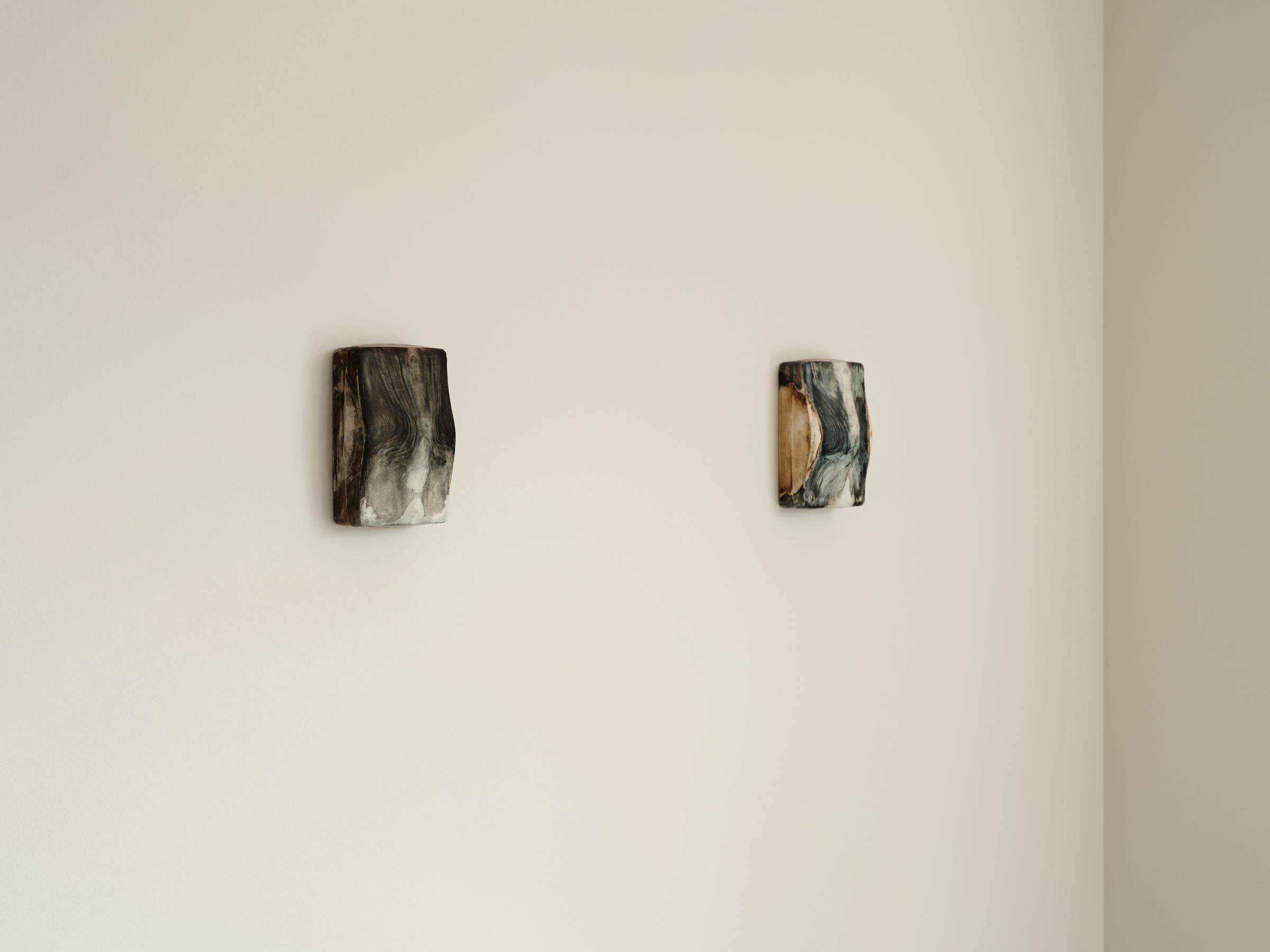
Gypsum cement, colored pencil, graphite, crayon, ink, acrylic ink
17 x 10.8 x 6.4 cm
Unique
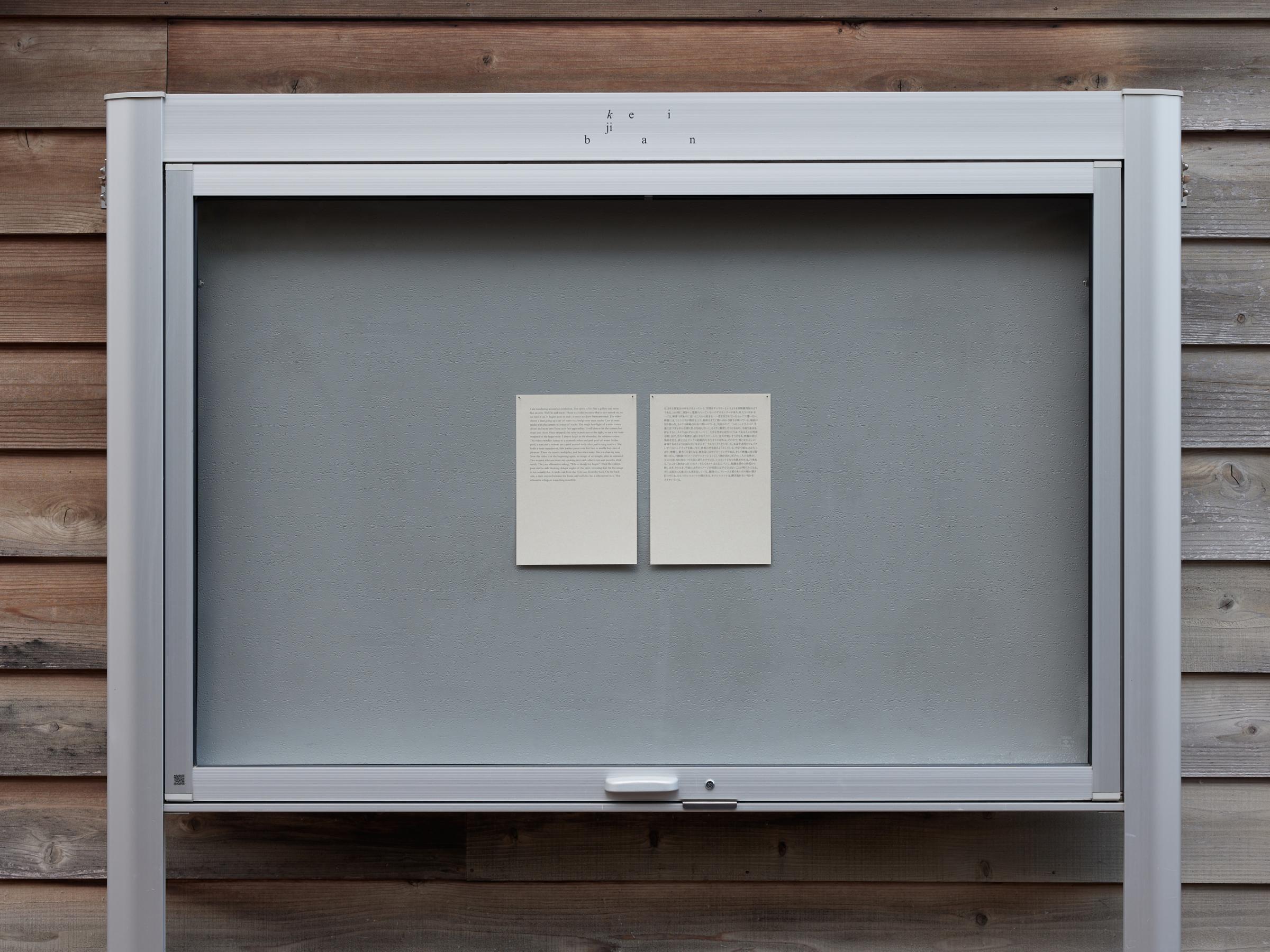
The exhibition Nine Plots, Eight Lodes opens June 15 at Keijiban with an exhibition of two sheets of paper: a transcribed dream in English and its translation into Japanese. This same narrative dream-text serves as the title of one of Olson’s artworks—a painted plaster cast from late 2025. Gesturally brushed and stained with ink, the casting exactingly replicates the form and surface cracks of an antique molded-leather box. Biomorphic nodes and bumps protrude across the form like the head of a bone, softly abstracted by a layer of skin. This cast box is not on view here in Kanazawa; instead, the two sheets of paper stand in as traces of its absence and a prelude to the exhibition’s second chapter.
Opening at Yonkai on July 18, the absent form reappears as a set of eight new painted reliefs installed across the two-room gallery, each a plaster cast of the same soft-edged leather box. Eight more dreams have been recorded and paired as the artworks’ titles. The plaster casts are, again, each painted with ink and stains, as well as wax crayons, colored pencils. The striated, muscular brushstrokes vary on each form in their presence, weight, arrangement and (dis)order. Installed low, at the height of the abdomen, the reliefs invite an encounter that is as corporeal as it is contemplative, their modest scale only deepening the intimacy of their physical presence.








B. Ingrid Olson's exhibition took place at Keijiban from June 15 to July 31, and at Yonkai from July 18 to 31, 2026.